Welcome Guest 

Show/Hide Header

Welcome Guest, posting in this forum requires registration.


Pages: 1 [2]
Author Topic: Fungii Identification
Ken Hume
Administrator
Posts: 687
Permalink
Post Re: Fungii Identification
on: October 31, 2023, 14:39
Quote

It's that time of year when toadstools and mushrooms abound and this year they are prolific as a result of the very wet autumn.

Image

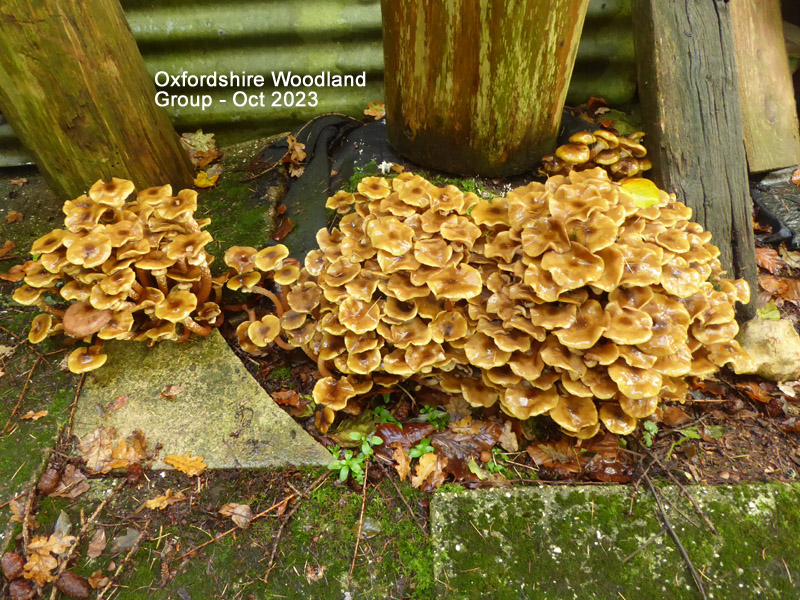
These fungi are emerging in multitude from a beech tree stump.. What kind of fungi is it ?

Ken Hume
Administrator
Posts: 687
Permalink
Post Re: Fungii Identification
on: October 13, 2025, 08:41
Quote

Some colourful and exotic fungii have emerged in early October 2025 including :-

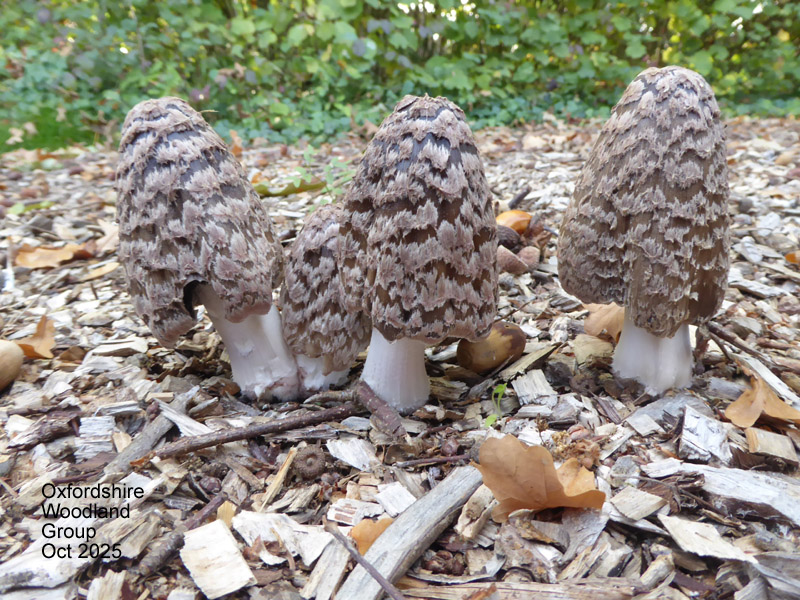
- growing on a mixture of willow and hazel wood chip. This could be Magpie Toadstool (Coprinus picaceus) or possibly Lawyers Wig / Shaggy Inkcap (Coprinus comatus).

Image

- on an oak stump could be Common Bonnet (Mycena galericulata) ?

Image

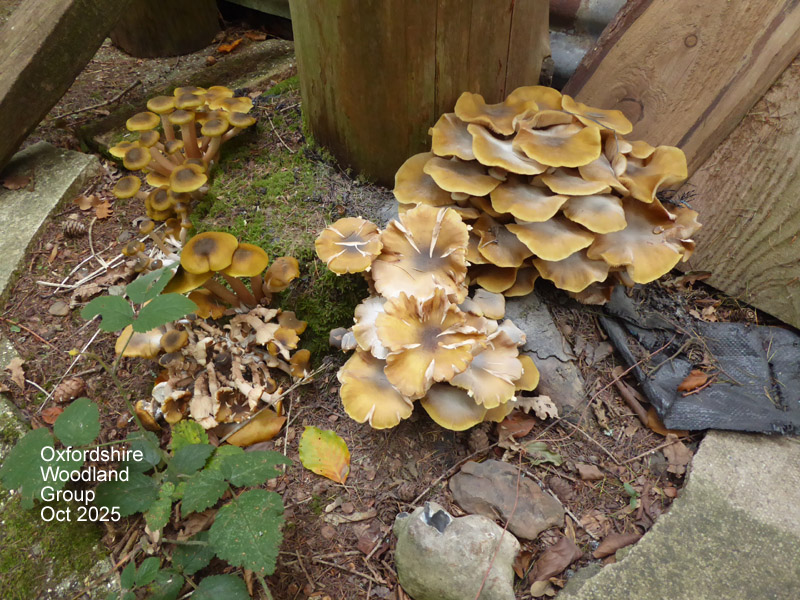
-on a beech stump could be Sulphur Tuft (Hypholoma fasciculare).

Image

Can anyone confirm the above suggestions ?

Ken Hume
Administrator
Posts: 687
Permalink
Post Re: Fungii Identification
on: August 15, 2026, 11:15
Quote

Oak Bracket or Weeping Polypore (Pseudoinonotus dryadeus) fungus found on the side of a 200+ year old oak tree was seen mid August 2026 following the very hot dry summer. This has not been seen before on this tree. It is very solid with brown droplets on the surface.

Image

See :- https://fungiatlas.com/pseudoinonotus-dryadeus/ for further details and extract below :-

Oak Bracket or Weeping Polypore (Pseudoinonotus dryadeus) is a massive, awe-inspiring bracket fungus that primarily colonizes the roots and lower trunks of ancient oak trees. For a brief window during its rapid summer growth phase, it puts on a spectacular display, actively “weeping” large droplets of golden, amber-colored liquid from its velvety margins. While this beautiful fungus is a visual treat for nature lovers, it is a dreaded sight for arborists and foresters. As a highly destructive parasite, it causes severe white rot in the structural roots of the host tree. Because the decay happens underground and at the very base of the trunk, an infected oak may appear perfectly healthy in its leafy canopy until a strong storm suddenly topples the severely weakened giant.

Pseudoinonotus dryadeus is a formidable parasite that transitions into a saprotroph once its host perishes. It aggressively attacks living broad-leaved trees, demonstrating a massive ecological preference for oak. It establishes itself in the root system and the “butt” (the very base of the trunk), causing a fast-acting white rot that dissolves the structural lignin of the wood. It is occasionally, though rarely, documented on chestnut, beech, elm, maple, and alder. It typically fruits from late summer into the autumn months, though its growth is frequently cut short by opportunistic fungus-eating insects that devour the soft, young flesh in July and August.

Pages: 1 [2]
Mingle Forum by cartpauj
Version: 1.0.34 ; Page loaded in: 0.033 seconds.